How Evolution Shapes Human Behaviour – And Why It Matters How We Talk About It
Exploring how evolutionary ideas influence human behaviour, the risks of misapplying science through eugenics, and how neuroscience can promote empathy and inclusion.
Evolution describes how species change over time through genetic variation and natural selection. For humans, these gradual changes have shaped not only our physical traits but also how we think, feel, and relate to others.
The same instincts that once supported survival in early human communities such as staying close to a group or reacting quickly to threats, may still influence our behavior today. Evolutionary psychology explores these links, asking how ancient challenges contributed to patterns of thought and emotion we see in modern life (Baumeister & Leary, 1995).
For instance, that uneasy feeling of being left out might have deep evolutionary roots. Researchers suggest that the fear of rejection once served as a survival mechanism: being excluded from a group could mean losing access to essential resources, such as food, shelter, or protection (MacDonald & Leary, 2005).
Other everyday experiences may share similar origins:
- Fear of snakes or heights may reflect dangers that require quick avoidance.
- Altruism — helping others without direct benefit — may have supported cooperation in small groups.
- Pair bonding and family structures could have evolved to promote care for offspring and group stability.
Yet, evolution doesn’t dictate behaviour. Human actions are shaped not only by biology but also by culture, personal history, and environment (Henrich, Heine & Norenzayan, 2010). Understanding this balance helps us appreciate that behaviour is flexible, and diversity in how we think and act is part of what makes us human.
However, as history demonstrates, scientific ideas about evolution have not always been applied responsibly, and this misuse has had lasting consequences.
When Science Goes Wrong: The Legacy of Eugenics
While evolutionary theory has deepened our understanding of human behaviour, history shows that even valuable science can be distorted when separated from ethics and empathy. One of the clearest examples of this misuse is eugenics, a movement that gained influence in the late 19th and early 20th centuries.
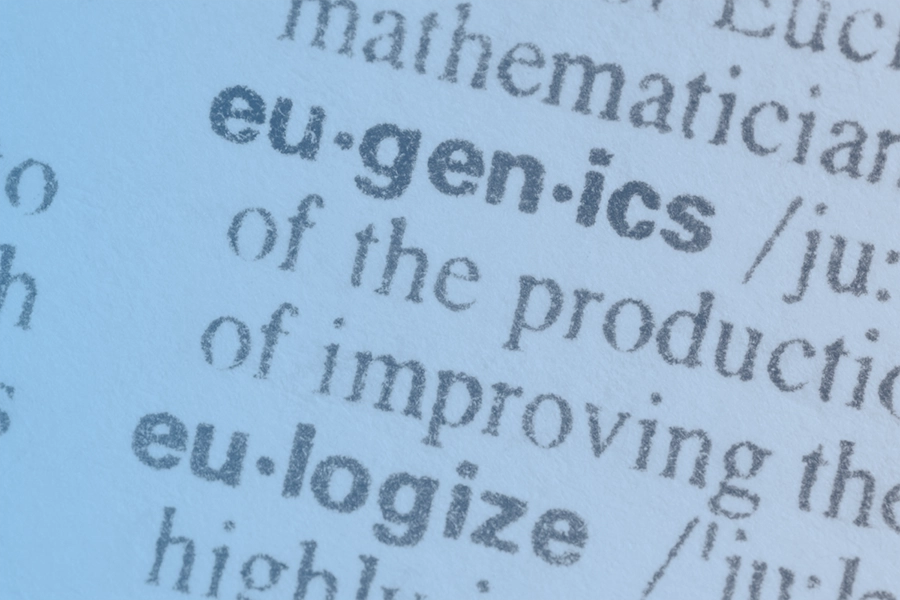
Eugenics promoted the idea that humanity could be “improved” through selective breeding. Supporters claimed that encouraging reproduction among those considered “fit” and restricting it among those deemed “unfit” would strengthen society. Although framed as science, these beliefs were rooted in discrimination and fear, not evidence.
The language of eugenics — terms like “genetic purity” and “fitness” — gave a false sense of legitimacy to harmful policies. Across several countries, these ideas justified forced sterilisation, segregation, and other serious violations of human rights. In its most devastating form, eugenics helped shape the ideology behind Nazi Germany’s extermination campaigns.
As the National Human Genome Research Institute explains, eugenics is a powerful reminder that scientific progress must always be guided by ethical reflection and social responsibility (Genome.gov, 2020). When empathy and context are removed, science can easily become a tool for exclusion rather than understanding.
The lasting lesson is that how we discuss evolution matters. When scientific ideas are simplified or used to justify inequality, they lose their integrity. Modern evolutionary psychology takes a very different approach. It does not seek to label or rank people but instead asks questions about how humans adapt and behave across different environments and cultures.
This raises an important question: What does evolutionary psychology actually explore, and how does it help us understand ourselves more accurately?
Evolutionary Psychology – An Open-Ended Approach
Evolution isn’t a single explanation for why we behave the way we do. It’s better understood as an ongoing process shaped by adaptation, variation, and the constant interaction between organisms and their environment. In humans, that environment includes not only nature but also culture, relationships, and social systems.
Because of this complexity, evolutionary psychology doesn’t offer rigid answers. Instead, it asks broad, thought-provoking questions that explore how certain behaviours might have developed over time. For example:
- Why do humans form long-term relationships?
- Why are some fears shared across all cultures?
- Why do people sometimes help others with no clear personal benefit?
The aim isn’t to define universal truths but to uncover patterns — recurring tendencies that help explain how our minds and behaviours might have evolved. To do this, scientists draw on evidence from multiple disciplines, including cross-cultural studies, neuroscience, and behavioural research.
This open-ended approach reflects a significant shift in how we discuss science. When we frame evolution as a flexible process rather than a fixed rule, we create space for nuance and diversity. It allows for the possibility that biology shapes behaviour, but so do experience, learning, and social context.
Understanding that distinction helps avoid oversimplified explanations—especially the common idea that “it’s all in your genes.”
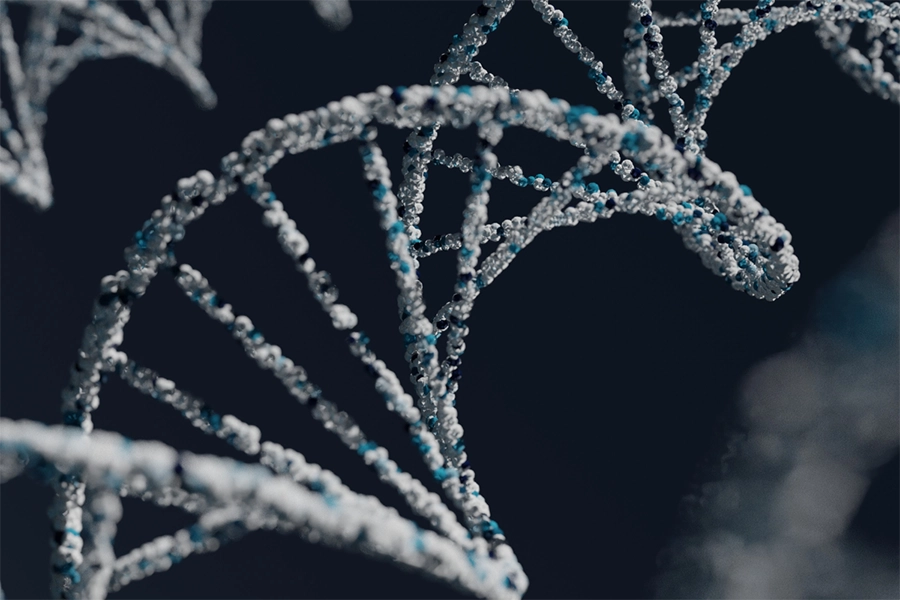
“It’s in Your Genes” Isn’t the Whole Story
Saying someone’s behaviour is “just in their DNA” might sound scientific, but it’s misleading. It suggests that genes alone control behaviour. While genes do influence traits, behaviour is rarely the result of biology alone. Genes certainly play a role — but so do:
- Childhood environment
- Education and relationships
- Stress, nutrition, and mental development
- Cultural norms and media
When behaviour is reduced to genetics alone, it risks encouraging fatalistic thinking — the idea that people are simply “born that way” and cannot change. This perspective can also reinforce discrimination by implying that difference equals deficiency.
In reality, human behaviour is fluid, adaptive, and shaped by both the body and the world around it. Understanding this interplay not only deepens scientific insight but also opens the door to more compassionate ways of supporting human diversity.
This more holistic perspective is especially relevant when we consider how mental health is understood and described today.
Rethinking Diagnosis and Mental Health
Labels like ADHD or Depression help describe symptoms, but they may not tell the whole story. A growing number of researchers are looking beyond diagnostic categories to understand neurocognitive patterns — how people process emotions, attention, memory, and more.
This approach respects individual variation instead of framing it as “disorder.” It can be especially valuable in systems like the NDIS, where supporting diverse ways of functioning matters more than fitting people into rigid categories.
- Recognising that early stress affects brain development can inform better education and parenting support.
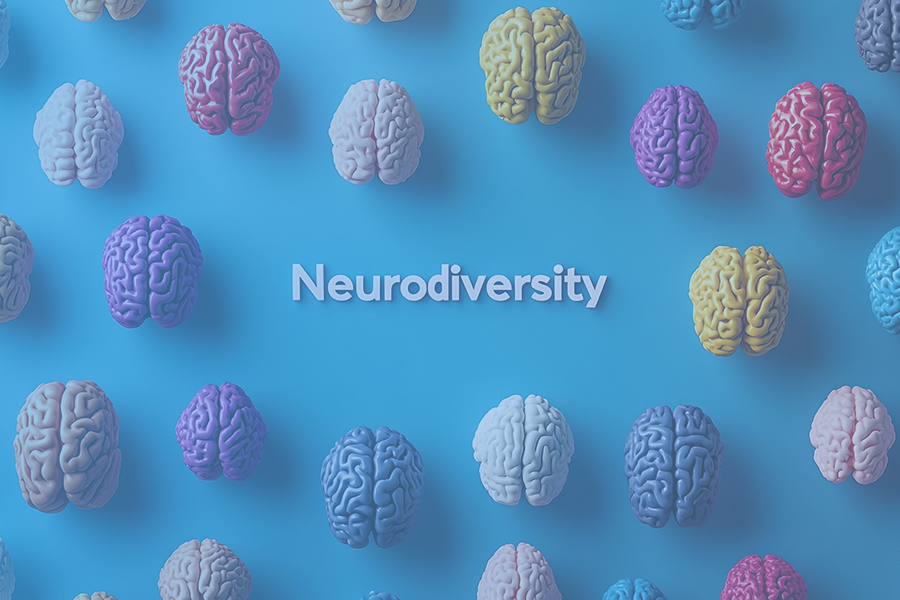
- Understanding neurodiversity can help shift focus from “fixing” people to supporting different ways of being.
Science isn’t just about facts — it’s about values. The goal isn’t to prove who’s “normal” or “superior,” but to understand how we all adapt and grow in different ways. This is where neuroscience can support empathy and inclusion.
Neuroscientific Evolution for a More Inclusive Future
Evolution isn’t a blueprint or a hierarchy. It’s a process—a way to understand change. But how we talk about evolution matters.
Misusing it to justify inequality or exclusion is not only unethical—it’s bad science.
Used wisely, evolutionary and using neuroscientific insights can help us create a world where
understanding replaces judgment, and where diversity is seen as a strength, not a flaw.
Biology is not fate and using Personal Development tools like Neury® can assist in overcoming neurocognitive limitations by enhancing and practicing neurocognitive skills. Visit NeuroCog® to learn more.
References:
Baumeister, R. F., & Leary, M. R. (1995). The need to belong: Desire for interpersonal attachments as a fundamental human motivation. Psychological Bulletin, 117(3), 497–529.
MacDonald, G., & Leary, M. R. (2005). Why does social exclusion hurt? The relationship between social and physical pain. Psychological Bulletin, 131(2), 202–223.
Henrich, J., Heine, S. J., & Norenzayan, A. (2010). The weirdest people in the world? Behavioral and Brain Sciences, 33(2–3), 61–83.
National Human Genome Research Institute. (2020). Eugenics and Scientific Racism.