Growth Mindset Explained: A Scientific Perspective on Human Development and Belief Systems
What is human development and how does mindset influence learning and adaptation? Learn what current science says about belief systems and their impact across the lifespan.
Human development refers to the dynamic interplay of biological, psychological, cognitive, and social processes that evolve across the lifespan. From early childhood through later adulthood, these processes are shaped by genetic factors, environmental exposures, and increasingly, by individual-level belief systems.
Understanding how these influences interact helps explain why mindset—especially the growth mindset—has become such a focus in developmental psychology.
Among psychological influences, the concept of mindset – particularly the growth mindset – has gained considerable attention in education and developmental psychology. A growth mindset is defined as the belief that abilities and traits, including intelligence, can develop over time through effort, learning, and adaptive strategies. While popular in educational discourse, current research calls for a nuanced and evidence-based understanding of how belief systems shape developmental trajectories. (Dweck, 2006)
Human Development as an Adaptive, Context-Driven Process
To appreciate how mindset fits within development, it’s essential to consider the broader context of human growth.
Development is not linear or predetermined. It unfolds through complex interactions between genetic predispositions and contextual factors such as:
- Access to healthcare and education
- Family structure and peer relationships
- Socioeconomic conditions
- Cultural norms and expectations
These factors shape physical growth, cognitive capacity, emotional regulation, and behavioural adaptation. Even among individuals with similar biological or social conditions, outcomes vary significantly—a variability that invites investigation into internal beliefs such as perceived control and adaptability.
This is where the idea of mindset begins to connect with the broader picture of human development.
What Is a Growth Mindset, Scientifically Speaking?
Expanding on that idea, research into mindset provides a psychological framework for understanding these internal differences.
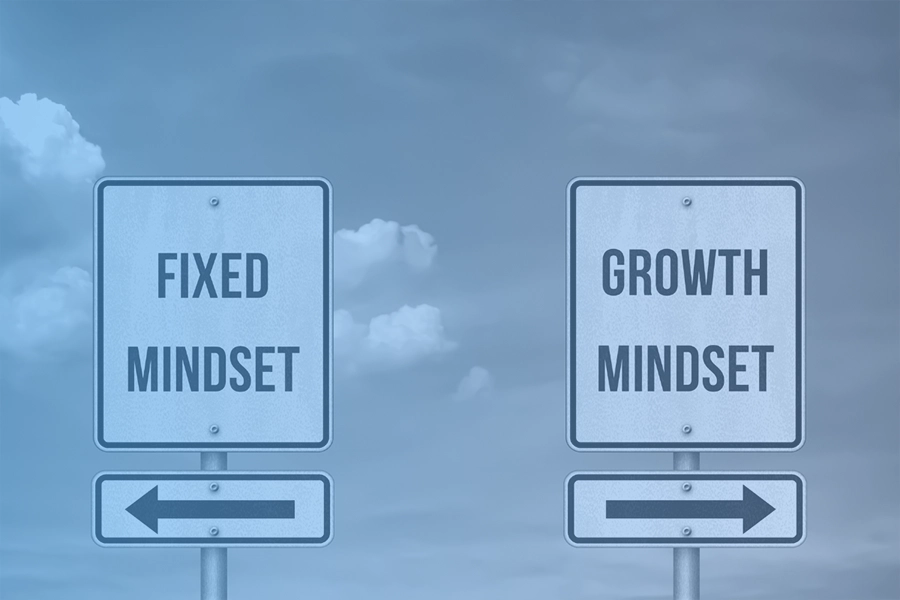
Originally coined by psychologist Carol Dweck, the term “growth mindset” describes a belief that intelligence and other capacities are not fixed traits, but can change with experience and intentional effort. This contrasts with a fixed mindset, where abilities are seen as static and unchangeable.
Recent longitudinal and meta-analytic studies suggest that growth mindset beliefs are correlated with:
- Greater persistence in problem-solving (Burnette et al., 2013)
- Increased willingness to seek help and accept feedback (Yeager & Dweck, 2012)
- Adaptive coping in the face of academic and personal setbacks (Schroder et al., 2017)
However, the strength and reliability of these outcomes depend on context, age group, and the presence of enabling environments.
To understand how these beliefs take root, we can look at how mindset develops across the lifespan.
Children, Adults, and the Role of Feedback
From early learning environments to adulthood, feedback plays a defining role in shaping beliefs about growth and ability.
Mindsets begin forming in early childhood and are sensitive to environmental cues, including the type of feedback children receive. For instance, effort-focused feedback (“You worked hard on this”) tends to support growth-oriented beliefs, whereas trait-focused feedback (“You’re so smart”) may inadvertently reinforce fixed views.
In adults, mindset continues to shape engagement in areas like:
- Career development
- Interpersonal conflict resolution
- Mental health and behaviour change
Importantly, belief alone does not guarantee success or resilience. Mindset influences how individuals interpret experiences and make behavioural choices in conjunction with other factors such as social support, resource access, and cognitive flexibility.
While these findings are promising, the science behind mindset continues to evolve and reveal important limitations.
Limitations and Evolving Research
As with many influential psychological concepts, mindset research benefits from critical reflection and refinement.
Contemporary researchers urge caution in overselling mindset interventions. Meta-analyses have revealed modest effect sizes, and some studies report limited efficacy in diverse or under-resourced populations (Sisk et al., 2018). Questions remain about:
- Cultural variability in mindset formation and expression
- The durability of mindset shifts following intervention
- Interactions between mindset and structural inequality
The neuroscience term often associated with mindset — neuroplasticity — refers to the brain’s capacity to reorganise in response to experience. While this is a legitimate concept, it is not synonymous with unlimited potential, and its use should be grounded in specific, measurable contexts (Kolb & Gibb, 2011).
Even so, exploring the connection between belief and adaptability offers valuable insight into human agency and growth.
Belief, Agency, and Adaptive Possibility
At the heart of this discussion lies a fundamental question: how do beliefs influence our capacity for change?
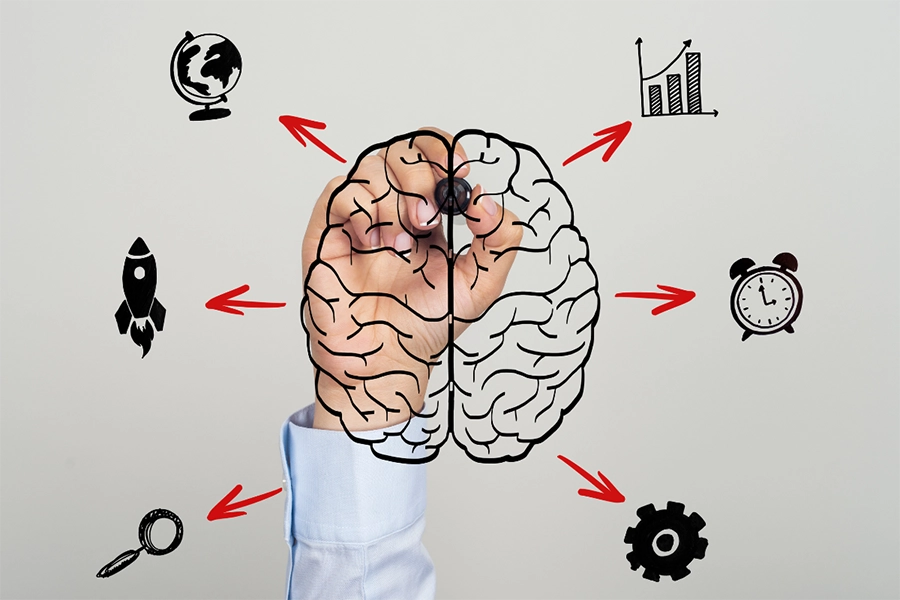
Beliefs about changeability may enhance psychological agency—the sense that one can influence personal outcomes. This sense of agency, in turn, supports goal-directed behaviour and cognitive flexibility.
For example:
- A student who believes they can improve may attempt new study strategies.
- An adult experiencing burnout may try restructuring routines or seeking support, if they believe change is feasible.
While these behaviours do not alter environmental constraints, they do shape engagement with challenge and opportunity.
Bringing these scientific insights into everyday practice allows people to apply mindset principles in tangible, measurable ways.
Exploring Development with Neury®
This is where neuroscience-based tools like Neury® bridge theory and application.
If you’re curious about how your beliefs, emotional habits, or behavioural patterns influence your development, the Neury app® offers a structured, neuroscience-informed way to explore these connections.
Neury® helps users:
- Build self-awareness and emotional regulation skills
- Track cognitive flexibility and self-directed learning
- Engage with real-time neurocognitive training to support adaptive growth
Grounded in over 25 years of research, Neury® translates scientific insight into accessible daily practices. Whether you’re focused on personal development, educational performance, or emotional balance, it offers a data-informed approach to change.
References:
Burnette, J. L., et al. (2013). “Mind-sets and self-regulation: A review and agenda for future research.” Psychological Inquiry.
Dweck, Carol (2006) “Mindset: The New Psychology of Success”
Bonanno, G. A., et al. (2012). “Resilience to loss and trauma.” Annual Review of Clinical Psychology.
Van der Kolk, B. (2014). The Body KeYeager, D. S., & Dweck, C. S. (2012). “Mindsets that promote resilience: When students believe that personal characteristics can be developed.” Educational Psychologist.eps the Score. Penguin Books.
Cusack, K., et al. (2016). “Psychotherapy for posttraumatic stress disorder in adults: A review of the evidence.” Agency for Healthcare Research and Quality.
Schroder, H. S., et al. (2017). “Neural evidence for enhanced attention to mistakes among school-aged children with a growth mindset.” Developmental Cognitive Neuroscience.
Sisk, V. F., et al. (2018). “To what extent and under which circumstances are growth mind-sets important to academic achievement? Two meta-analyses.” Psychological Science.
Kolb, B., & Gibb, R. (2011). “Brain plasticity and behaviour in the developing brain.” Journal of the Canadian Academy of Child and Adolescent Psychiatry.