
Why Positive Thinking Isn’t Enough: Understanding the Body–Mind–Emotion Connection
Positive thinking has its limits. Discover how emotions, body, and thoughts interact and how Neury® supports real emotional awareness and growth. Contact us today!
“Think positive.” It’s something people often say when we’re overwhelmed, uncertain, or hurting. It’s an attempt to offer hope, shift perspective, or lighten the emotional load. Maybe you’ve heard it during a difficult time, or even said it yourself, hoping it would help someone feel better. But is it really that simple? Can optimism alone change how we feel or what we face? A hopeful mindset can be powerful, it doesn’t always address the deeper emotional and physical patterns beneath the surface. This raises a deeper question: what else shapes how we feel and respond beyond our thoughts?
What Is the “Body-Mind-Emotion Connection”?
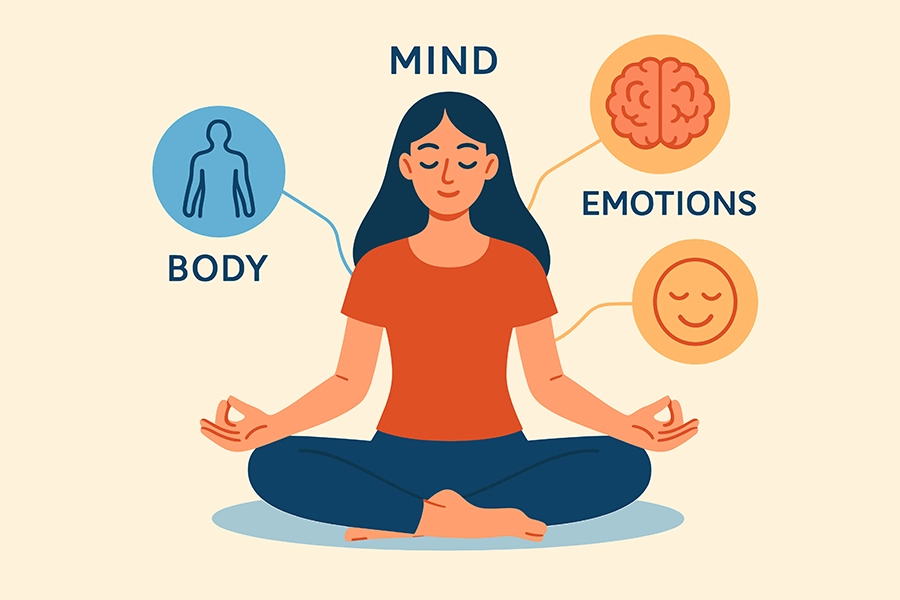
Have you ever noticed how your body reacts before your mind catches up? Like a sinking feeling in your stomach when something’s wrong, or tight shoulders after a stressful day? That’s not just in your head; it’s your body, mind, and emotions working together.
Neuroscientist Antonio Damasio (1994) found that emotions aren’t separate from reason; they help guide our decisions by signaling through the body. And Candace Pert (1997) discovered that the chemicals linked to emotion aren’t just in the brain but throughout the entire body. This means your body isn’t just reacting to feelings; it’s part of how you feel in the first place. Trying to understand this connection helps explain why real change often starts by tuning into what’s happening not just in your mind, but in your whole self.
How Emotions Show Up in the Body
Emotions are often described as “felt experiences,” and some research aligns with this view. A study led by Lauri Nummenmaa (2020) produced “bodily maps” of emotions, where participants consistently reported physical sensations associated with different emotional states, such as tension in the upper body during anger or reduced energy in the limbs during sadness.
Trauma research also explores the connection between emotional experiences and bodily responses. Bessel van der Kolk (2014), in The Body Keeps the Score, proposes that traumatic memories can be stored not only in the brain but also reflected in the body’s nervous system. This may help explain why some individuals report physical symptoms long after a distressing event. From this perspective, the body can be seen as a kind of record keeper of emotional experience.
Emotional Detachment vs. Emotional Awareness
Emotional detachment doesn’t mean avoiding or repressing feelings. The Oxford dictionary refers to it as: “the state of not being involved in something in an emotional way”, a skill that supports the suggestion of greater self-awareness in some contexts. While a frequently used term like “mindfulness” centres on an underlying idea of cultivating awareness of internal experience as it unfolds.
Some therapeutic models suggest that this kind of non-reactive observation may help interrupt automatic thought-emotion loops. Daniel Siegel (2010) refers to this as developing “mindsight” — a capacity to sense and reflect on one’s own mental processes. By stepping back from first-person emotional reactivity, individuals may become more aware of recurring patterns and respond in more deliberate ways.
Building Skills for Observing Body, Thoughts, and Emotions
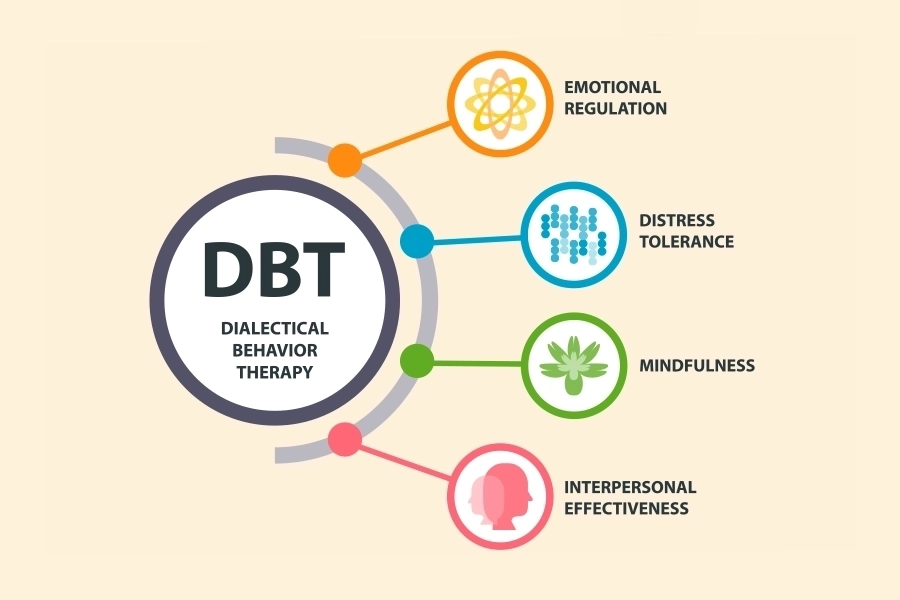
Awareness is a skill that can be developed. Psychological approaches like Dialectical Behaviour Therapy (DBT) and Acceptance and Commitment Therapy (ACT) offer structured methods for building this capacity.
- DBT, developed by Marsha Linehan (2015), teaches skills like “observe and describe” to help individuals become more aware of their internal states.
- ACT, popularised by Russ Harris (2009), encourages people to notice thoughts and emotions without needing to change or suppress them immediately.
These practices allow space between stimulus and response, making room for more deliberate action rather than habitual reactions.
The Problem with Forced Positivity
While cultivating a hopeful outlook can support wellbeing, constantly pushing ourselves to “stay positive” may be counterproductive. Barbara Held (2002) cautioned against the “tyranny of the positive attitude,” arguing that it can invalidate genuine suffering and lead to emotional suppression.
Similarly, Barbara Ehrenreich (2009) critiqued the cultural pressure to maintain unrelenting optimism, especially in the face of serious hardship. When positivity becomes a moral obligation, it may prevent people from addressing their emotions in a grounded, authentic way.
Are Positive Affirmations Helpful?
Positive affirmations like repeating “I am happy” or “I am enough” can be useful for some but may backfire for others. Research by Joanne Wood et al. (2009) found that individuals with low self-esteem often feel worse after repeating overly positive self-statements. The mismatch between internal reality and external words can heighten emotional dissonance.
The impact of affirmations depends not just on what is said, but how believable those statements feel to the person saying them. Without emotional congruence, affirmations can feel hollow or even disheartening.
Why Automatic Emotional Reactions Persist
Many people wonder why emotional habits are hard to change even when they commit to being more optimistic. Neuroscientific research helps explain this. Joseph LeDoux (1996) showed that emotional responses (especially fear) are processed in brain circuits that operate faster than conscious thought. These automatic reactions evolved to keep us safe and are deeply embedded.
Richard Davidson (2012) describes emotional styles as patterns shaped by both genetics and experience. While change is possible, it often requires sustained attention to emotion, body, and thought, not just affirmations or surface-level optimism.
Evolution Shaped More Than Just the Brain
The human nervous system evolved not only to think, but to feel and act in complex, socially embedded environments. Thoughts alone are not the steering wheel of our lives. Emotions, bodily states, and cognitive processes are part of a dynamic, interwoven system.
Rather than trying to “fix” our thinking with positivity, we can learn to observe and work with our internal experiences more holistically. Evolution did not give us thinking minds in isolation; it gave us interconnected systems capable of awareness, regulation, and growth. Understanding this connection offers a more sustainable path to mental and emotional wellbeing. Neury® was designed with this connection in mind.
By helping you track patterns in your emotions, body, and thoughts, Neury supports an integrated, sustainable approach to better understanding and regulating your emotions, thoughts and body.
Start reconnecting with your whole self, one insight at a time. Download Neury® today.
References:
Damasio, A. R. (1994). Descartes’ error: Emotion, reason, and the human brain. Putnam.
Davidson, R. J., & Begley, S. (2012). The emotional life of your brain: How its unique patterns affect the way you think, feel, and live—and how you can change them. Hudson Street Press.
Dispenza, J. (2012). Breaking the habit of being yourself: How to lose your mind and create a new one. Hay House.
Ehrenreich, B. (2009). Bright-sided: How the relentless promotion of positive thinking has undermined America. Metropolitan Books.
Harris, R. (2009). ACT made simple: An easy-to-read primer on acceptance and commitment therapy. New Harbinger Publications.
Held, B. S. (2002). The negative side of positive psychology. Journal of Humanistic Psychology, 42(1), 9–18.
Kabat-Zinn, J. (2005). Wherever you go, there you are: Mindfulness meditation in everyday life. Hachette Books.
van der Kolk, B. A. (2014). The body keeps the score: Brain, mind, and body in the healing of trauma. Viking.
LeDoux, J. (1996). The emotional brain: The mysterious underpinnings of emotional life. Simon & Schuster.
Linehan, M. M. (2015). DBT skills training manual (2nd ed.). Guilford Press.
Nummenmaa, L. (2020). Bodily maps of emotions. MIT Press.
Pert, C. B. (1997). Molecules of emotion: Why you feel the way you feel. Scribner.
Siegel, D. J. (2010). The mindful therapist: A clinician’s guide to mindsight and neural integration. W. W. Norton & Company.
Wood, J. V., Perunovic, W. Q. E., & Lee, J. W. (2009). Positive self-statements: Power for some, peril for others. Psychological Science, 20(7), 860–866.